Bangalore has always had a pulse for what’s new. Whether it’s technology, food culture, or real estate the city moves fast and moves with intention. And if you’ve been paying attention to how homes in Whitefield, Indiranagar, Koramangala, or Hebbal are being designed this year, you’ll notice something striking: luxury interiors in Bangalore no longer look the way they did three years ago.
The definition of luxury has shifted. It used to mean gold accents, heavy drapes, and ornate furniture. Today’s Bangalore homeowner many of them working professionals, NRIs returning home, or startup founders upgrading to their dream home is choosing something more refined. More intentional. Spaces that feel expensive because they’re thoughtful, not because they’re loud.
At Suntew, we’ve had the privilege of working on premium home interior projects across Bangalore and Mangalore, and we see these shifts up close on every project. Here’s what’s actually happening on the ground the trends that our clients are choosing, the materials they’re asking for, and the ideas that are reshaping luxury interiors in Bangalore in 2026.
1. Japandi Interiors The Calm That Bangalore Professionals Are Craving
If there’s one style that has moved from “trend” to near-permanent fixture in Bangalore’s luxury homes, it’s Japandi. A thoughtful blend of Japanese minimalism and Scandinavian warmth, Japandi interiors are defined by clean lines, muted tones, natural textures, and a deliberate absence of clutter.
Why is it so popular in Bangalore specifically? The city’s high-pressure work culture has created a deep desire for homes that serve as genuine sanctuaries. When you’re managing deadlines and back-to-back meetings all week, you don’t want to come home to a space that demands visual attention. Japandi gives you stillness.
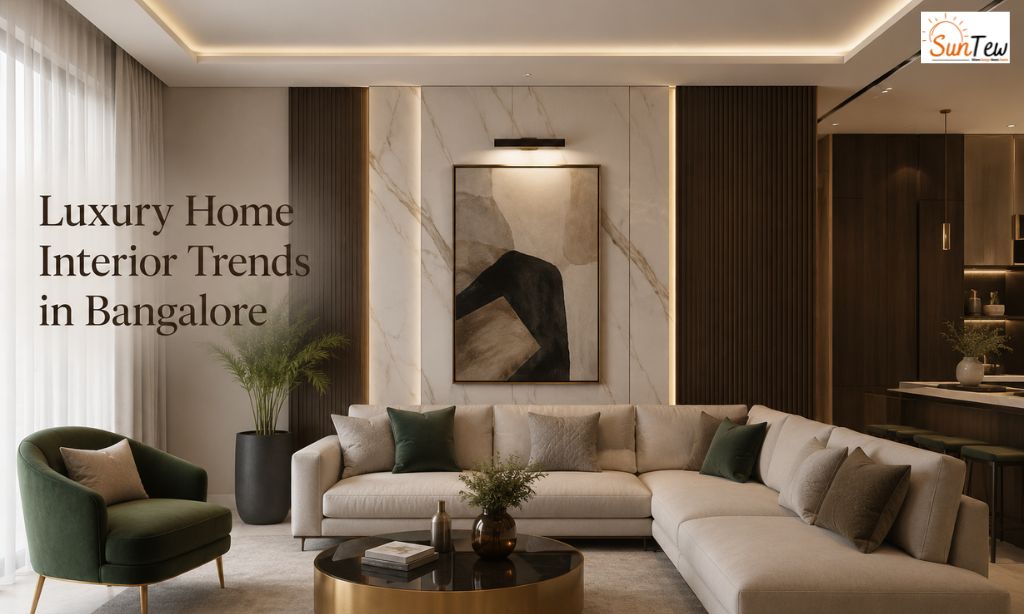
In practice, this translates to light oak or ash wood finishes on cabinetry, off-white or warm greige walls, linen and jute upholstery, and furniture with gentle curves rather than sharp angles. We’re seeing this aesthetic take over master bedrooms and living rooms in particular spaces where the homeowner wants to genuinely decompress.
The key to doing Japandi well in a luxury context is material quality. The palette is restrained, which means every individual material the wall texture, the fabric on the sofa, the finish on the floor needs to be exceptional. Budget Japandi can look sparse and cold. Luxury Japandi looks serene and considered.
2. Bespoke Built-Ins: Furniture That Belongs to the Space
One of the clearest signals that a home has been thoughtfully designed — rather than assembled from showroom purchases — is the presence of truly bespoke built-in furniture. And in 2026, Bangalore homeowners are asking for more of it.
We’re talking about custom entertainment units that run floor to ceiling and integrate the TV, storage, and ambient lighting into one seamless element. We’re talking about built-in wardrobes where the handle detail, the internal layout, and the colour have been chosen specifically for that room. Bespoke window seating with concealed storage underneath. Home office nooks carved into alcoves with custom shelving that fits the books and devices the owner actually uses.
The shift toward bespoke built-ins is partly aesthetic — it makes spaces look more resolved and less like a furniture catalogue. But it’s also practical. Bangalore apartments, even the premium ones, work with fixed floor plans. Custom furniture is the only way to genuinely maximise every square foot without making the space feel cramped.
At Suntew, our modular kitchen and wardrobe design work is almost entirely bespoke — because that’s where clients feel the difference most directly in their daily lives.
3. Warm Neutrals Over Cool Greys The Palette is Getting Warmer
A few years ago, every luxury interior in Bangalore seemed to be anchored in cool greys, crisp whites, and black accents. The look was sleek and dramatic, but also, over time, a little cold. In 2026, the pendulum has swung decisively toward warmth.
Warm neutrals — terracotta, sand, warm beige, dusty rose, sage green, and deep earthy ochres — are now the colours of choice for clients who want their homes to feel inviting as well as impressive. These tones photograph beautifully, age gracefully, and — importantly — make the people inside the home feel more relaxed.
This doesn’t mean colour is being avoided. Quite the opposite. We’re seeing more bold colour moments in 2026 — a statement deep teal on one wall of a living room, a forest green applied to a kitchen island, a terracotta accent that ties together an entire open-plan space. The difference from earlier trends is that these bold moments are used sparingly and deliberately, set against a warm neutral base rather than cold grey.
For false ceiling designs in Bangalore homes, warm white LEDs with warm-toned coves are replacing the blue-white downlights that dominated a few years ago. The light quality in a room has more impact on how “luxurious” it feels than most homeowners realise.
4. Smart Home Integration Invisible Technology, Visible Comfort
Bangalore is a tech city, and luxury home interiors here have always had a relationship with smart home technology. But what’s changed in 2026 is the sophistication of integration and the expectation that the technology should be invisible.
Early smart homes in Bangalore felt like technology showrooms. Touchscreens on every wall, visible wiring, control panels that clashed with the design. Today’s approach is very different. The goal is seamless integration where the tech disappears into the architecture.
Motorised curtains that align flush with the ceiling track when open. Under-cabinet lighting in the kitchen that responds to presence sensors. Multi-zone audio systems with speakers embedded in false ceilings. Smart locks that match the hardware finish of the door. Climate control that’s zoned and voice-activated without a thermostat visible on any wall.
We’re also seeing growing demand for integrated home automation systems Lutron, Control4, and similar platforms that tie lighting, climate, security, and entertainment into a single interface. For the Bangalore homeowner who manages a complex professional life, the idea of their home running seamlessly in the background is deeply appealing.
The design challenge and it is a challenge is ensuring the smart home infrastructure is planned during the interior design phase, not bolted on afterward. Conduit routing, panel placement, and device positioning all need to be resolved before walls are closed. This is something Suntew coordinates carefully on every project where smart home integration is part of the brief.
5. Statement Ceilings The Fifth Wall Gets Its Due
For a long time, ceilings in Indian homes were treated as an afterthought white paint, maybe a simple cove for lighting, and that was it. In 2026’s luxury interiors in Bangalore, the ceiling has become one of the most expressive elements in the room.
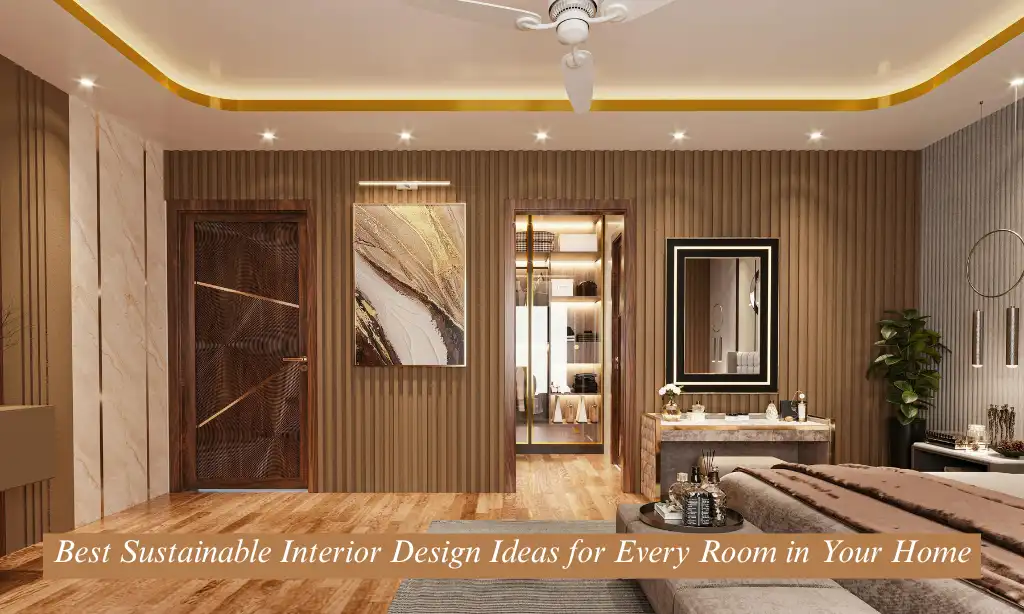
False ceiling designs in Bangalore have evolved well beyond basic gypsum coves. We’re seeing coffered ceiling patterns with deep shadow lines and warm concealed lighting. Wooden slat ceilings in living areas that add warmth and acoustic softness. Fluted gypsum panels that create rhythm and texture overhead. In dining rooms, oval or rectangular feature ceilings that frame the table and pendant light as a composed moment.
The bedroom false ceiling trend has also matured. Rather than the elaborate multi-tier structures of earlier years, the preference now is for clean architectural lines with warm indirect light — a ceiling that makes you feel held rather than overwhelmed.
Statement ceilings photograph exceptionally well and have enormous impact on how a room feels, which makes them one of the best investments a homeowner can make on a luxury interior project.
6. Premium Materials: Fluted Panels, Bouclé, and Micro-Cement
Material choices in 2026’s luxury Bangalore interiors reveal a clear appetite for texture. After years of flat surfaces — high-gloss laminates, smooth tiles, lacquered finishes homeowners and designers are reaching for materials that have visual and physical depth.
Fluted panels have become one of the most requested elements in our projects. Used on TV unit backgrounds, wardrobe panels, bedroom headboards, and kitchen islands, fluted wood or MDF panels create a rhythm of light and shadow that makes even simple furniture look architectural. The material itself is not expensive — the impact is entirely about proportion and placement.
Bouclé fabric has moved from high-end furniture brands into the mainstream of luxury interiors. Its loopy, textured surface catches light differently at different times of day, and its tactile quality signals quality and comfort in a way that smooth upholstery doesn’t. We’re using it on accent chairs, sofa upholstery, and bedroom headboards.
Micro-cement continues to grow in popularity for bathrooms, kitchens, and even accent walls in living areas. Applied correctly, it creates a seamless, matte surface with subtle tonal variation that looks far more expensive than it actually is — and unlike traditional tiles, there are no grout lines to break the visual flow.
7. Pooja Room Design Where Spirituality Meets Luxury
Bangalore’s luxury homeowners haven’t moved away from tradition they’ve found ways to elevate it. The pooja room or mandir area has become one of the most carefully considered spaces in the homes we design.
The trend is toward dedicated pooja rooms that feel like sanctuaries within the home not token alcoves squeezed into a corner. Marble or stone surfaces, backlit niches with warm amber light, teak or rosewood panelling, and brass or gold hardware that references traditional craftsmanship while sitting comfortably within a contemporary interior.
We’re also seeing more clients asking for sliding or hinged panel systems that conceal the pooja area when not in use — allowing the space to integrate seamlessly with the adjacent living or dining area without losing its sanctity.
8. Open Kitchen Concepts with Premium Finish
The fully open kitchen — integrated into the living and dining space without a separating wall — has become the preferred layout in Bangalore’s premium apartments. And in 2026, the focus has moved from layout to finish quality.
Handleless kitchen cabinets with push-to-open mechanisms. Quartz or Dekton countertops that can handle the heat and staining that Indian cooking produces. Built-in appliances hobs, ovens, microwaves, and dishwashers — integrated flush with the cabinetry so the kitchen reads as one resolved composition rather than a collection of machines.
The kitchen island has become standard in larger apartments used as prep space, breakfast bar, and social anchor all at once. We’re designing islands with contrasting finishes to the perimeter cabinetry, integrated under-counter storage, and pendant lighting positioned to frame the island as a focal point when viewed from the living room.
What This Means for Your Home Project
The luxury interior trends shaping Bangalore homes in 2026 share a common thread: intentionality. Every element — the palette, the materials, the technology, the furniture is chosen to serve a purpose. Nothing is decorative for its own sake. Everything works together to create a home that feels genuinely elevated rather than merely expensive.
If you’re planning a home interior project in Bangalore whether it’s a full 3BHK renovation, a modular kitchen upgrade, or a single-room transformation the most important investment you can make is time spent on planning. The trends above are starting points, not prescriptions. The best luxury interior is the one that reflects the people who live in it.
Suntew has been designing premium interiors in Bangalore and Mangalore for years, working with homeowners who want spaces that are as functional as they are beautiful. If you’d like to explore what these trends could look like in your specific home, we’re happy to talk.
Contact Suntew: Call 8951500340 or visit suntew.com to book a free online consultation.
Frequently Asked Questions
What are the most popular luxury interior design styles in Bangalore in 2026?
Japandi (Japanese-Scandinavian fusion) is currently the most requested aesthetic in Bangalore’s luxury home segment. Warm neutral palettes, bespoke built-in furniture, and smart home integration are also highly sought-after. Contemporary Indian luxury which blends traditional craftsmanship elements like brass hardware and carved wood with clean modern layouts is gaining significant traction.
How much does a luxury interior design project cost in Bangalore?
Luxury home interior costs in Bangalore vary significantly based on scope, materials, and finishes. A fully designed 3BHK apartment in the premium segment typically starts from ₹18–25 lakhs for material and execution, with design fees in addition. Individual spaces like modular kitchens start from ₹3.5 lakhs and bedrooms from ₹2.5 lakhs. Suntew offers a free consultation to assess your specific requirements and provide a detailed estimate.
Is smart home automation worth adding to a luxury interior project?
For most Bangalore homeowners in the premium segment, smart home integration delivers genuine daily value — particularly for lighting control, motorised window treatments, and home security. The critical factor is planning it during the interior design phase, not afterward. Retrofitting smart systems into a completed interior is expensive and often compromises the design.
Which areas of a home benefit most from luxury interior design investment?
Based on our experience in Bangalore’s premium segment, the living room, master bedroom, and modular kitchen deliver the highest return on design investment — both in terms of daily quality of life and in resale or rental value. False ceiling design and lighting quality are often underestimated but have enormous impact on how a space feels.