Japandi & Warm Contemporary Interior Design for Bangalore Homes — 2026 Style Guide
Published 12 July 2026 · Suntew Interior Designers
Warm contemporary and Japandi minimalism are the two interior styles Bangalore homeowners are asking for most in 2026 — replacing the cold, all-white minimalism of a few years ago with earthy palettes, natural textures, and rooms that feel calm without feeling bare. Neither style requires starting from scratch; both work well layered onto an existing Bangalore apartment interior.
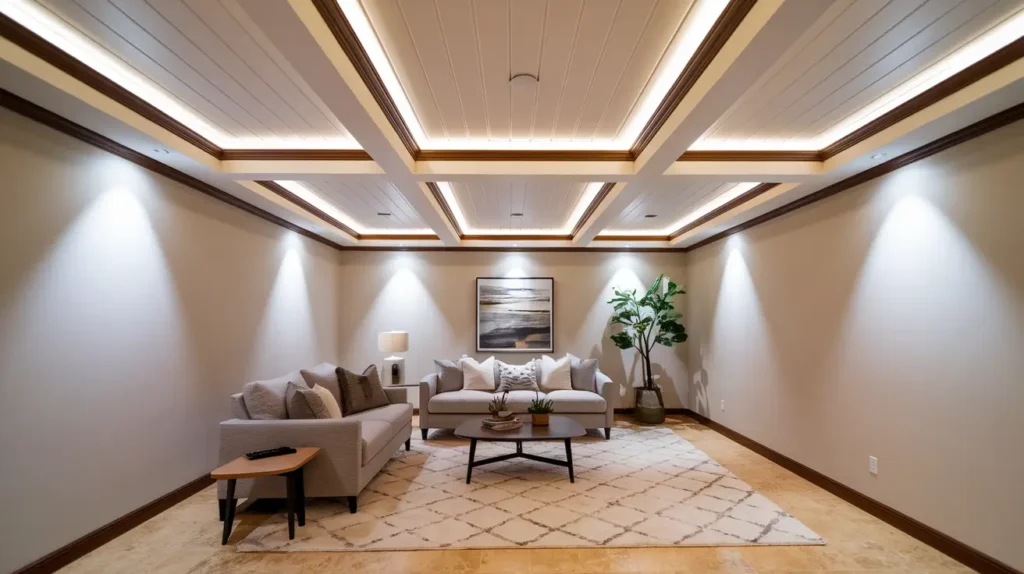
Japandi vs Warm Contemporary — What's the Actual Difference?
Japandi combines Japanese restraint with Scandinavian warmth — clean lines and uncluttered surfaces, paired with warm wood tones and a lived-in comfort. Warm contemporary keeps the same clean geometry but swaps cool greys and stark whites for terracotta, ochre, sage, and warm beige. For a living room, warm contemporary usually suits Bangalore's brighter, more social spaces; Japandi suits bedrooms and quieter reading corners better.
The Core Palette
Both styles draw from the same base palette — see our full interior colour guide for how to apply these tones room by room, and our bedroom and living room colour combinations guide for specific pairings.
Materials That Define Both Styles
Wood: light oak or teak-finish laminates for Japandi; warmer walnut tones for warm contemporary — both avoid high-gloss finishes.
Textiles: linen and cotton in muted tones — oatmeal, clay, sage — replace bright accent cushions.
Lighting: warm-white (2700-3000K) rather than cool-white, layered across a pendant, floor lamp, and cove lighting rather than one bright ceiling fixture.
Storage: handle-less wardrobes and kitchen cabinets keep Japandi's clean-line look; warm contemporary allows slightly more visible brushed-brass or matte-black hardware.

Does This Style Suit Indian Homes and Climate?
Yes, with small adjustments. For deeper design philosophy on Japanese wabi-sabi principles that underpin the Japandi look, Architectural Digest covers the origins well. Bangalore's moderate climate suits natural wood and linen; coastal Mangalore homes need more moisture-resistant choices given the humidity — see the India Meteorological Department for regional humidity data if planning material selection carefully. The main adaptation for Indian homes is storage — both styles originate from smaller homes with less to store, so an Indian Japandi or warm-contemporary space needs more deliberate storage planning to stay clutter-free long-term, not just on handover day.
This pairs naturally with a broader sustainable design approach and can be planned alongside Vastu-compliant layouts if that matters for your family — the muted, natural-material palette works well with both.
Suntew's approach: we design storage capacity first, aesthetic second — because a Japandi-styled home that's cluttered within six months isn't Japandi anymore. Every 3D design includes a storage audit based on how your family actually lives. See our Bangalore services or book a free consultation.
Frequently Asked Questions
What is the difference between Japandi and warm contemporary design?
Japandi blends Japanese minimalism with Scandinavian warmth, favouring very clean lines and limited colour. Warm contemporary keeps modern geometric shapes but uses warmer colour palettes like terracotta and sage instead of stark white or grey. Japandi is more restrained; warm contemporary allows slightly more colour and pattern.
Is Japandi style suitable for small Bangalore apartments?
Yes — Japandi's uncluttered approach and light wood tones tend to make small rooms feel more spacious, provided storage is planned generously so surfaces stay clear day-to-day, not just right after handover.
What colours work best for warm contemporary interiors?
Terracotta, ochre, sage green, warm beige, and soft clay tones are the core palette, usually paired with a neutral wall colour and warm-wood furniture rather than black or cool grey accents.
Ready to start your project? Call 8951500340 or 9606230962, or contact us online.