Introduction to Sustainable Interior Design
Sustainable interior design is no longer a niche trend, it is becoming the new standard for homes in cities like Bangalore, Mangalore and across India. More homeowners are asking a simple question: how can my home look beautiful and still be kind to the planet? That is exactly where green interiors come in.
At its heart, sustainable interior design means planning your spaces to use fewer resources, reduce waste and support healthier living. From the paint on your walls to the fabrics on your sofa, every choice has an impact. As energy costs rise and climate concerns grow, families are shifting towards low-impact interiors that feel modern, calm and future ready.
In this guide from Suntew, you will discover practical, real world ideas to make your home eco conscious without sacrificing comfort or style. We will walk through smart materials, simple upgrades and design tips that help you create a space that looks good, feels good and does good.
What Is Sustainable Interior Design?
Sustainable interior design is a way of planning and decorating interiors so that they are gentle on the planet, healthy for the people living inside, and practical to maintain over time. Instead of choosing materials only for looks or price, it considers where they come from, how long they last and what happens when they are replaced.
At its core, this approach balances three pillars:
Environmental sustainability – using resources wisely, choosing low-impact materials, reducing waste and saving energy and water.
Social sustainability – creating safe, comfortable spaces that support the wellbeing of your family and the people who make and install the products.
Economic sustainability – designing in a way that is affordable to build, run and maintain over the long term.
Simple definition:
Sustainable interior design is the practice of creating beautiful, functional spaces using materials, products and layouts that reduce environmental impact, support health and offer long-term value.
Compared to conventional interiors, which may rely on synthetic finishes, heavy chemicals and short-lived trends, eco friendly interior design prefers natural, durable and responsibly sourced options. It focuses on better air quality, smart daylight use, and energy-efficient lighting and appliances. The result is a home that still reflects your style, but wastes less, feels fresher and stays relevant for years.
Why Choose Eco-Friendly Interior Design for Your Home?
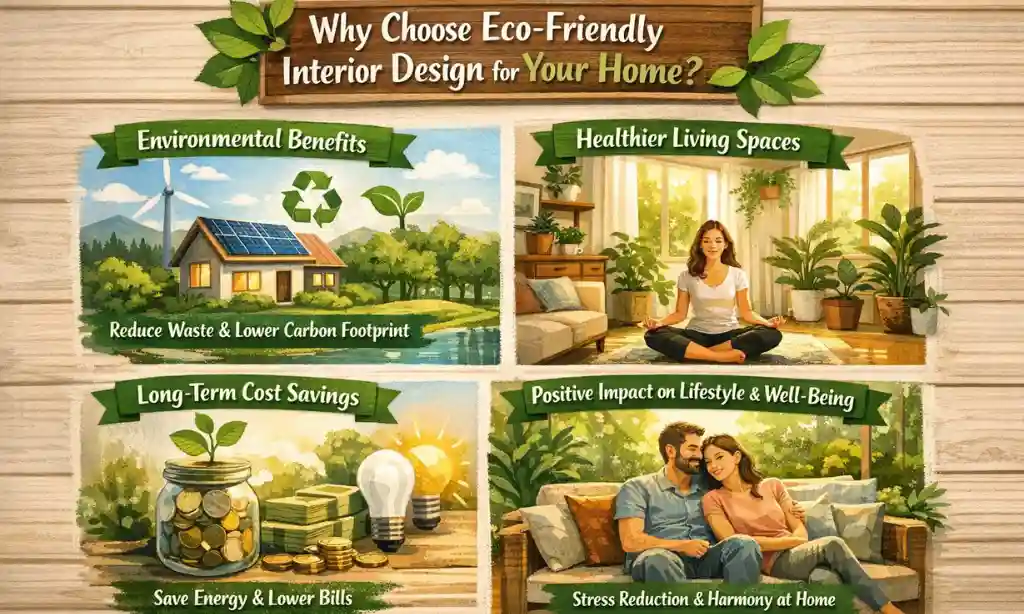
Choosing eco-friendly interior design is not just about following a trend. It is about creating a home that supports your health, saves money over time and respects the environment. When you start looking at every room through a sustainable lens, even small decisions begin to make a big difference.
- Environmental benefits
Eco friendly home designs focus on natural, low-impact materials, efficient lighting and smarter layouts. This helps reduce your carbon footprint, cuts wastage during construction and renovation, and encourages responsible sourcing. When you pick reclaimed wood over new timber or LED lights over conventional bulbs, you quietly reduce pressure on natural resources every day. - Healthier living spaces
Many homes unknowingly trap dust, toxins and fumes from paints, adhesives and synthetic fabrics. Eco friendly interior design focuses on low-VOC paints, natural fabrics and breathable finishes that improve indoor air quality. This can be especially helpful for children, elderly parents or anyone with allergies and sensitivities. - Long-term cost savings
Energy-efficient lights, good cross-ventilation, thoughtful shading and durable materials may cost a little more at the start, but they reduce electricity, repair and replacement expenses over the years. Instead of redoing your home every few seasons, you invest in a timeless look that ages gracefully. - Positive impact on lifestyle and well-being
A sustainable home often feels calmer, more organized and connected to nature. More daylight, indoor plants, natural textures and clutter-free planning can reduce stress and create a soothing atmosphere after a long day. Over time, these design choices support better mood, deeper rest and a more mindful way of living with your family.
Sustainable Interior Design Materials You Should Know
When you start planning a greener home, materials are one of the most powerful levers you can change. The right choices can reduce waste, cut toxins and still give your home a warm, premium finish. At Suntew, we guide homeowners step by step through sustainable interior design materials that work in real Indian homes, not just in catalog photos.
Reclaimed and recycled wood
Instead of using freshly cut timber for every wardrobe, door or flooring, reclaimed wood gives a second life to old beams, furniture or factory leftovers. It brings rich character, natural grains and a story into your home. Properly treated and seasoned, reclaimed or recycled wood is strong, stable and can be used for tables, shelves, wall cladding and more. You get the beauty of solid wood while reducing demand for new trees.
Bamboo and cork materials
Bamboo grows quickly, needs less water and regenerates after cutting, which makes it one of the most eco friendly interior design choices for flooring, wall panels and furniture. It looks contemporary and works well in both modern and traditional themes. Cork, harvested from bark without cutting the tree, is another smart option for underlay, pin boards and even flooring. It is soft underfoot, offers acoustic comfort and adds subtle warmth to interiors.
Natural stone and clay-based finishes
Natural stone like Kota, granite or locally available options are durable, long lasting and easy to maintain when chosen correctly. They age beautifully and can be used for floors, countertops and accent walls. Clay-based plasters and terracotta tiles help walls breathe, regulate humidity and create a soft, earthy look. These finishes are ideal for Indian climates where heat and moisture are everyday realities.
Low-VOC paints and finishes
Standard paints and polishes can release VOCs (volatile organic compounds) that affect indoor air quality long after painting is done. Low-VOC or zero-VOC paints, water-based polishes and natural oils are kinder to your family and the environment. They reduce strong chemical smells, support healthier air and still offer a wide range of colors and finishes. Choosing these options is one of the simplest ways to make interiors more sustainable.
Sustainable fabrics: organic cotton, jute, linen and wool
Soft furnishings play a big role in how your home feels. Fabrics like organic cotton, jute, linen and wool are breathable, comfortable and made from renewable resources. They work beautifully for curtains, rugs, cushions and upholstery. Natural textures also visually calm a space and pair well with wood and stone. When possible, look for responsibly produced or handwoven textiles that support local artisans along with the planet.
Used thoughtfully, these sustainable interior design materials help you create a home that is stylish, durable and genuinely low-impact.
Eco-Friendly Home Designs That Balance Style and Sustainability
Eco friendly home designs are not about giving up comfort or beauty. When planned well, they feel calm, modern and premium – while quietly saving energy and resources in the background. At Suntew, we focus on layouts and details that work for real families in Indian cities, not just for magazine photos.
Minimalist sustainable interiors
Minimalist sustainable interiors start with one idea: use only what you truly need, but choose each piece well. Clean lines, fewer but better-quality furniture pieces, hidden storage and clutter-free surfaces make homes easier to maintain. This cuts unnecessary purchases, reduces waste and keeps the focus on natural materials, light and space.
Biophilic design concepts
Biophilic design brings nature into daily life. Indoor plants, natural textures, small indoor courtyards, stone or clay finishes and views of greenery all help the mind relax. Even a small balcony garden, a vertical planter in the living room or a green corner near a window can change the mood of a home. These details support mental well-being and make sustainable interior design feel warm and inviting.
Energy-efficient layout planning
Good design starts on paper. When rooms are planned to get maximum natural light and airflow, you automatically reduce dependence on artificial lighting and air conditioning. Positioning living areas where daylight is stronger, grouping wet areas like the kitchen and bathrooms to reduce plumbing runs, and planning shading for exposed walls are simple layout decisions that pay off for years through lower energy use.
Natural lighting and ventilation strategies
Eco-friendly home designs always respect the path of the sun and wind. Larger windows in the right direction, ventilated skylights, jaali patterns, ventilators above doors and cross-ventilation between opposite openings keep spaces bright and airy. Light-colored walls and reflective surfaces bounce daylight deeper into rooms, while ceiling fans and ventilators help reduce AC usage.
Together, these design strategies create stylish, future-ready homes that feel comfortable every day while quietly reducing their environmental footprint.
Room-by-Room Sustainable Interior Design Ideas
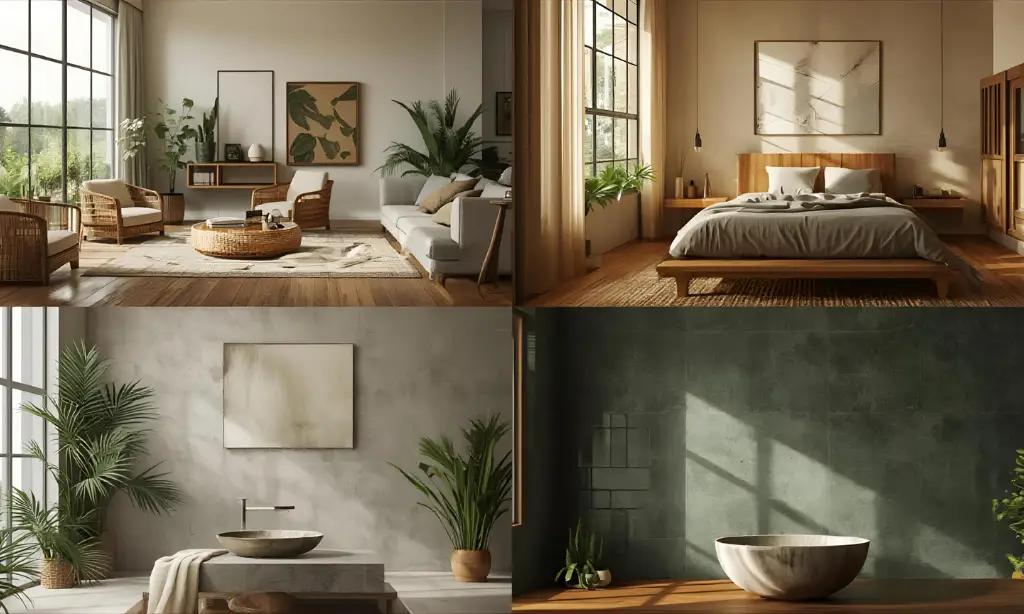
Every home is different, but the idea of sustainable interior design can be applied to each room in simple, practical ways. Instead of changing everything at once, you can start with one room and slowly extend eco friendly interior design choices across your entire home.
Sustainable living room ideas
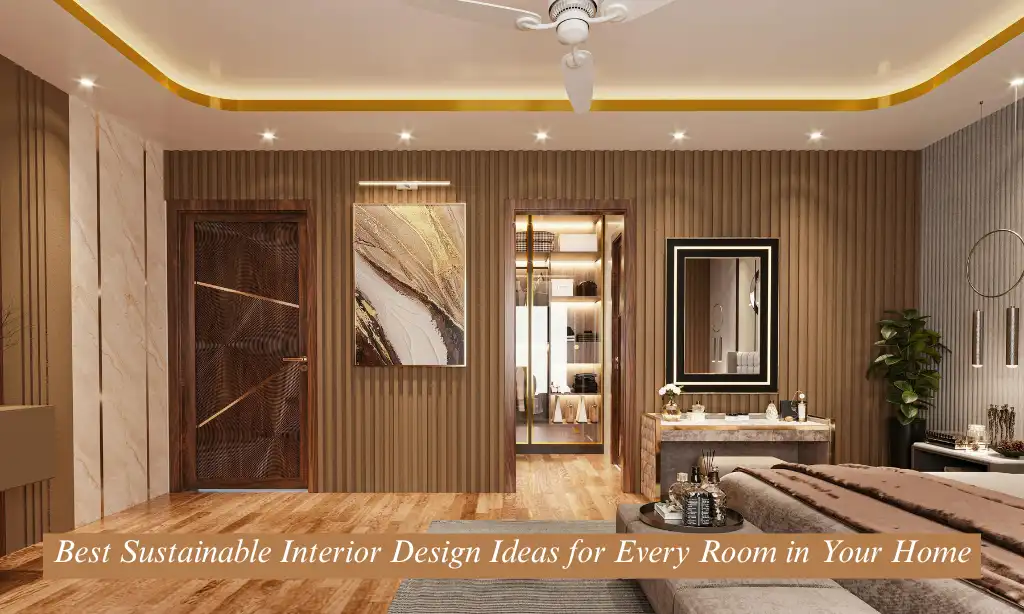
Your living room is where guests get their first impression and where the family spends most time together. Choose a sturdy, long lasting sofa with a wooden frame instead of flimsy particle board. Use sustainable fabrics like cotton or linen for upholstery and curtains. Add jute or handwoven rugs instead of synthetic carpets. For lighting, combine LED ceiling lights with floor or table lamps so you can control brightness and save energy. Indoor plants, bamboo blinds and reclaimed wood centre tables instantly give a warm, green interior feel.
Eco-friendly bedroom interiors
Bedrooms should support deep rest and clean air. Opt for low-VOC paints in soft, calming shades. A solid wood bed with a good quality natural mattress is better for your back and for the planet than cheap foam-heavy options. Choose breathable bed linen in cotton or linen, and avoid heavy synthetic fabrics that trap heat. Use blackout curtains where required to cut heat and improve sleep, and keep gadgets and harsh lights to a minimum. A simple, clutter free layout with built in storage reduces dust and makes cleaning easier.
Green kitchen design concepts
Kitchens are high use spaces, so eco friendly interior design here gives big returns. Plan efficient work triangles between stove, sink and fridge to reduce unnecessary movement. Use durable, long lasting materials like stone or solid surfaces for counters instead of fragile finishes. Install energy efficient appliances and LED task lights under cabinets. Separate bins for dry and wet waste make composting and recycling more natural. Where possible, use modular cabinets built with low formaldehyde boards and water based polishes.
Sustainable bathroom interiors
Bathrooms may be small, but they use a lot of water and materials. Choose water-saving faucets and dual flush systems. Anti skid, long lasting tiles and simple wall finishes reduce the need for frequent repairs. Well-planned ventilation, whether through windows or exhaust fans, helps control moisture and mold, improving indoor air quality. Use compact, durable storage for toiletries and prefer refillable containers over single-use plastic bottles. A clean, bright bathroom with efficient fixtures is a key part of an eco-conscious home.
How to Make Your Existing Home More Sustainable
You don’t have to wait for a full renovation to live greener. With a few thoughtful changes, you can bring sustainable interior design into the home you already have. Start small, room by room, and focus on choices that are easy to maintain for your family’s lifestyle. These simple, real-world eco friendly interior design tips work well for apartments and independent homes alike.
Simple material swaps
Begin with items you replace often. When you buy new bedsheets, curtains or rugs, choose natural fabrics like cotton, linen or jute instead of synthetics. If you are repainting, pick low-VOC paints to reduce chemical fumes indoors. For furniture, repair and re-polish what you can, and when you must buy new pieces, look for solid wood, bamboo or good quality engineered boards instead of flimsy, short-life options.
Energy-efficient upgrades
Change to LED bulbs throughout the house to cut power use immediately. Use ceiling fans wisely so you rely less on air conditioning, especially during evenings and mild months. If your budget allows, choose energy-efficient appliances when old ones need replacement, starting with the fridge, washing machine and AC. Simple steps like sealing window gaps and using lighter curtains in the day also reduce cooling loads.
Sustainable décor and accessories
Decor items are an easy way to bring sustainable interior design into daily life. Add indoor plants, handwoven baskets, clay pots and wooden frames instead of plastic-heavy décor. Display fewer, meaningful pieces rather than many small items that collect dust. Choose locally made crafts to support artisans and reduce transport impact.
Waste reduction tips
Set up basic dry and wet waste segregation in the kitchen. Reuse glass jars and containers instead of buying new plastic storage. Donate or resell furniture and décor you no longer need instead of throwing them away. Over time, these habits reduce clutter, save money and make your home feel lighter and more intentional.
Common Myths About Sustainable Interior Design
Even today, many homeowners hesitate to explore sustainable interior design because of a few persistent myths. Clearing these doubts is often the first step towards a greener home.
Myth 1: “It’s too expensive.”
Yes, some eco friendly materials can cost more upfront, but they usually last longer and reduce running costs. Durable finishes, efficient lights and better planning mean fewer repairs, lower power bills and less frequent renovations. Over 5–10 years, the total spend is often similar – or even lower – than a conventional setup.
Myth 2: “Eco-friendly means boring design.”
Green interiors are not limited to beige walls and plain furniture. With today’s choices in tiles, fabrics, textures and lighting, sustainable interiors can be warm, colourful, modern or traditional, depending on your taste. At Suntew, we start with your style and then select eco friendly interior design solutions that match it.
Myth 3: “There are very few material options.”
This might have been true years ago, but not now. From bamboo, cork and reclaimed wood to low-VOC paints, clay plasters and organic fabrics, there is a wide range to choose from at different budgets. The real challenge is not lack of choice, but knowing what to pick – and that is where a good sustainable interior design partner helps.
Cost of Sustainable Interior Design: Is It Worth It?
For many homeowners, the biggest question is simple: how much does sustainable interior design really cost, and is it worth paying a little extra? The honest answer is that it depends on your choices, but in most real projects the long-term value is higher than the initial difference.
Initial investment vs long-term savings
Some eco friendly materials, low-VOC paints or efficient fixtures can be 10–20 percent higher in upfront price compared to the cheapest options. However, they usually last longer, need fewer repairs and keep your home healthier. Over a few years, reduced repainting, lower maintenance and fewer replacements often balance out the extra investment.
ROI on energy-efficient interiors
Big savings show up in your electricity bills. LED lighting, better cross-ventilation, insulated windows, smart fans and efficient ACs can cut power use month after month. When you look at the sustainable interior design cost over 5–10 years, these savings usually cover the premium you paid in the beginning and continue to reward you after that.
Budget-friendly sustainable choices
Going green does not always mean going premium. Simple steps like choosing durable finishes instead of trendy ones, reusing existing furniture, buying local materials and avoiding wasteful décor can keep budgets under control. At Suntew, we design around your budget first, then suggest the most impactful sustainable choices within it.
Future Trends in Sustainable Interior Design
Sustainable interior design is evolving quickly, especially in growing urban centres like Bangalore and Mangalore. Homeowners are asking smarter questions, and technology is making eco friendly interior design easier to achieve and maintain.
Smart eco-homes
Smart lighting, sensors and app-based controls are becoming standard in modern apartments and villas. Automated dimming, motion-based lights and smart plugs help cut wastage without changing your daily habits. Over time, these systems will connect with solar power, energy monitoring and even weather data to optimise comfort and savings.
Circular design practices
The next big shift is from “use and throw” to “use, reuse and return”. Modular furniture that can be repaired, reconfigured or recycled, take-back programs for old fittings and choosing products with longer warranties are all part of circular design. The goal is simple – less waste to landfill, more value from every material.
Net-zero and carbon-neutral interiors
As awareness grows, more families will look for interiors that balance what they consume with what they save. Better insulation, on-site solar, low-impact materials and high-efficiency appliances will work together to move homes closer to net-zero living. For homeowners who start now, these sustainable interior design trends mean quieter, cooler, cleaner homes that are ready for the future.
Conclusion: Designing a Stylish, Sustainable Future
Sustainable interior design is really about making wiser everyday choices for your family and for the world outside your window. When you choose better materials, plan for light and ventilation, and cut unnecessary waste, you get a home that feels calmer, cleaner and more comfortable to live in.
A greener home does not have to look experimental or difficult to maintain. It can be warm, modern, rooted in local materials and perfectly aligned with how your family actually lives. Small steps like low VOC paints, natural fabrics, efficient lighting and thoughtful layouts slowly add up to a big positive impact over the years.
Ready to design a greener home? Talk to our sustainable interior design experts today.